
 Cosmetics
 Grooming equipment
 Grooming tools
 Health and wellbeing
 Accessories


 2026-02-26
Proper Nutrition
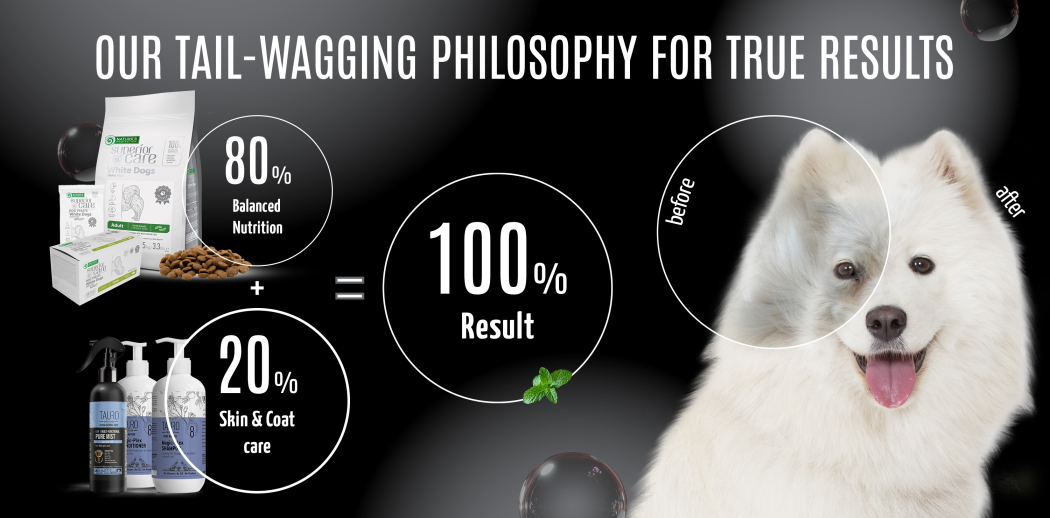
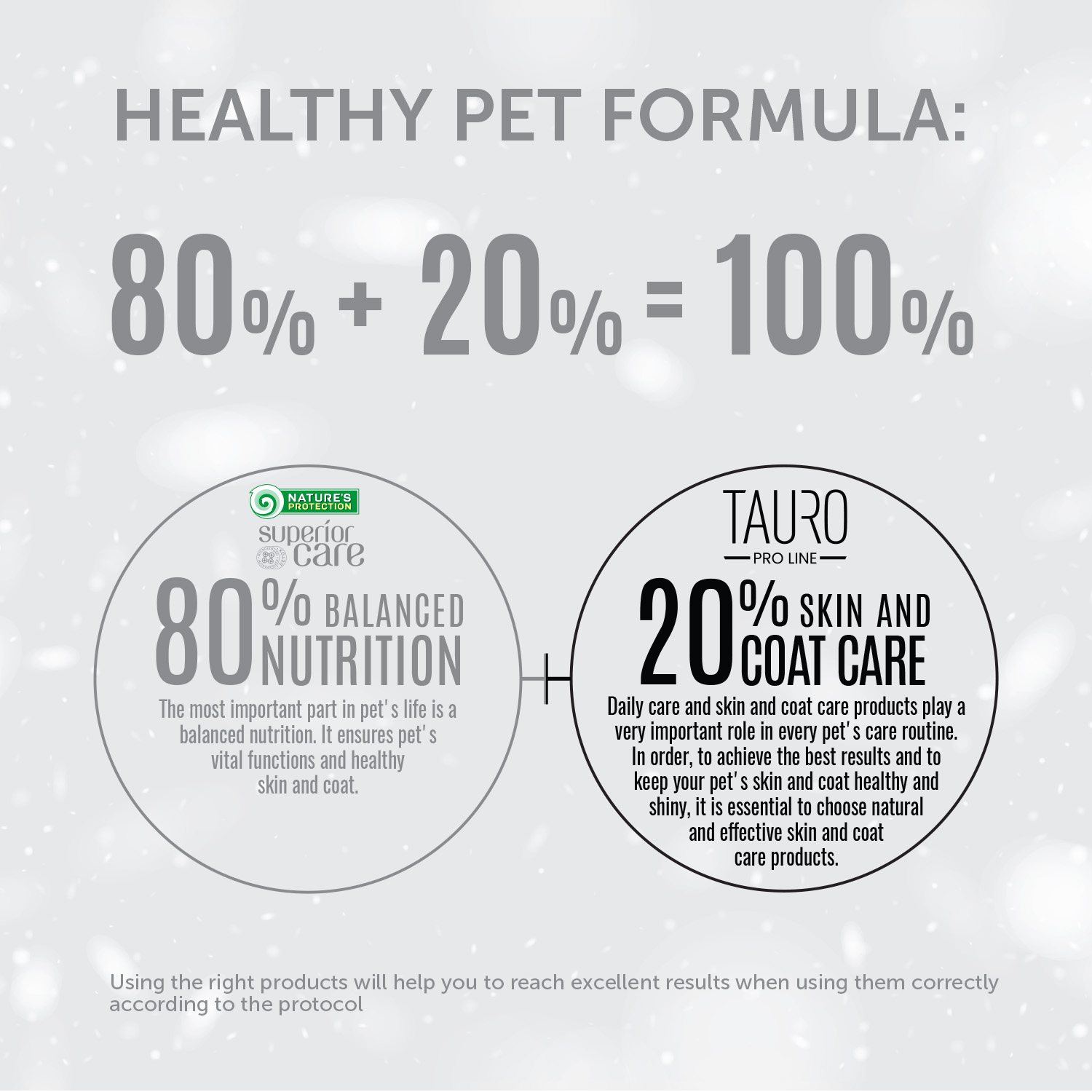
Nutrition Accounts for 80% of Skin and Coat Condition
When working with skin and coat health, I always state this very clearly:
Nutrition accounts for approximately 80% of all problems — or their solutions.
The remaining 20% consists of external factors.
Why is this the case?
Because the skin is not just a surface. It is an organ that directly reflects what is happening internally.
How Nutrition Affects Skin and Coat
Proper — or improper — nutrition has a direct impact on:
-
Skin pH balance
-
Inflammatory processes within the body
-
Gut health
-
Immune system function
-
Detoxification pathways
-
Follicle strength
-
The hair growth cycle
If internal balance is disrupted, the skin will be the first to show it.
When Does Nutrition Become a Problem?
Nutrition becomes problematic when the diet is:
-
Excessively acidifying
-
Not tolerated by the individual dog
-
Overloaded with unnecessary ingredients
-
High in artificial additives, flavorings, or colorants
-
Excessively high in protein without proper balance
-
Mineral-imbalanced
In such cases, the body begins to “offload” the problem through the skin.
How Does This Manifest?
The symptoms are usually very clear:
-
Itching
-
Tear staining
-
Beard discoloration
-
Paw licking
-
Brown staining between the toes
-
Recurrent ear infections
-
Chronic, recurring skin irritation
-
Unpleasant body odor
This is not a superficial issue.
It is a signal of internal imbalance.
The Remaining 20% – What Does That Include?
These are factors that may worsen the condition but are rarely the primary cause:
-
Inappropriate cosmetics (aggressive pH levels, synthetic ingredients)
-
Parasites (fleas, ticks, internal parasites)
-
Hormonal imbalances
-
Fungal or bacterial infections
-
Improper bathing frequency or technique
These factors can aggravate the condition; however, without correcting nutrition, the root cause remains unresolved.
The Most Important Rule
If we address only the 20% but fail to adjust nutrition, the problem very often returns.
Sometimes even more severely.
Only by addressing the cause — not just the symptoms — can we achieve stable, long-term results.
The Progression of Allergic Reactions: How It Begins
An allergy never suddenly starts “from everything.”
It follows a clear progression.
Stage 1 – Ears
This is almost always the first signal.
Healthy ears are:
-
Light in color
-
Odor-free
-
Free of discharge
-
Not warm to the touch
At the onset of an allergic response:
-
The ear becomes red
-
It feels warmer
-
Discharge appears
-
An unpleasant odor develops
This is a sign that inflammatory processes are already active in the skin.
Stage 2 – Eyes
If the process is not addressed:
-
Excessive tearing develops
-
Brown tear stains appear
-
The eye area becomes irritated
The body begins eliminating irritants through the mucous membranes.
Stage 3 – Oral Area
The reaction then progresses to the mouth:
-
Increased salivation
-
Brown saliva staining
-
Irritated skin around the muzzle
Stage 4 – Paws
This stage is highly characteristic:
-
Intensive paw licking
-
Redness between the toes
-
Moist, sensitive skin
The paws become one of the primary “exit points.”
Stage 5 – Generalized Itching
If still unaddressed:
-
Widespread itching begins
-
Scratching intensifies
-
Skin damage develops
At this point, the allergic reaction has become systemic.
Why Does This Happen?
An allergy is not merely a skin condition.
It is the body’s response to:
-
Inappropriate nutrition
-
Digestive disturbances
-
Toxin overload
-
Acid–base imbalance
-
Immune system overactivation
The skin, ears, and mucous membranes become elimination channels.
Why Early Intervention Matters
If the reaction is stopped at the ear stage, correction is relatively simple.
If intervention is delayed until generalized itching develops, treatment becomes more complex and prolonged.
The ears are always the first indicator.
My Working Principle
When addressing skin and coat issues, I never begin with cosmetics alone.
The first step is a comprehensive analysis of:
-
Primary diet
-
Protein source
-
Supplements
-
Treats
-
Dietary transition history
-
Parasite control
-
Current grooming products
Only then can the full picture be understood.
Cosmetics Matter — But Only Alongside Proper Nutrition
Improperly selected products can:
-
Damage the skin barrier
-
Trigger itching
-
Disrupt the microbiome
-
Promote flaking
However, even the best cosmetics will not be effective if internal imbalance persists.
When skin-compatible, natural products are combined with balanced nutrition, the skin restores itself fundamentally — not just visually.
A Holistic Approach Is the Only Long-Term Solution
A healthy, glossy coat and calm skin are the result of a system working in harmony:
✔ Balanced nutrition
✔ High-quality external care
✔ Functional elixirs
✔ A consistent routine
The greatest mistake is correcting only one part.
If one or two links in the chain are failing, a 100% result will not be achieved.


 Afghanistan
 Åland Islands
 Albania
 Algeria
 American Samoa
 Andorra
 Angola
 Anguilla
 Antigua and Barbuda
 Argentina
 Armenia
 Aruba
Aruba Australia
 Austria
 Azerbaijan
 Bahamas
 Bahrain
 Bangladesh
 Barbados
 Belarus
 Belgium
 Belize
 Benin
Benin Bermuda
 Bhutan
 Bolivia
 Bosnia and Herzegovina
 Botswana
 Brazil
 Brunei Darussalam
 Bulgaria
 Burkina Faso
 Burundi
 Cabo Verde
 Cambodia
 Cameroon
 Canada
 Cayman Islands
 Central African Republic
 Chad
Chad Chile
Chile China
China Colombia
 Comoros
 Democratic Republic of the Congo
 Congo
Congo Cook Islands
 Costa Rica
 Côte d'Ivoire
 Croatia
 Cuba
Cuba Curaçao
 Cyprus
 Czechia
 Denmark
 Djibouti
 Dominica
 Ecuador
 Egypt
Egypt El Salvador
 Equatorial Guinea
 Eritrea
 Estonia
 Eswatini
 Ethiopia
 Falkland Islands
 Fiji
Fiji Finland
 France
 French Polynesia
 Gabon
Gabon Gambia
 Georgia
 Germany
 Ghana
Ghana Gibraltar
 Greece
 Grenada
 Guatemala
 Guernsey
 Guinea
 Guinea-Bissau
 Guyana
 Haiti
Haiti Honduras
 Hong Kong
 Hungary
 Iceland
 India
India Indonesia
 Iran
Iran Iraq
Iraq Ireland
 Isle of Man
 Israel
 Italy
Italy Jamaica
 Japan
Japan Jersey
 Jordan
 Kazakhstan
 Kenya
Kenya North Korea
 South Korea
 Kuwait
 Kyrgyzstan
 Lao People's
 Latvia
 Lebanon
 Lesotho
 Liberia
 Libya
Libya Liechtenstein
 Lithuania
 Luxembourg
 Macao
Macao North Macedonia
 Madagascar
 Malawi
 Malaysia
 Maldives
 Mali
Mali Malta
Malta Mauritania
 Mauritius
 Mexico
 Micronesia
 Moldova
 Monaco
 Mongolia
 Montenegro
 Montserrat
 Morocco
 Mozambique
 Myanmar
 Namibia
 Nepal
Nepal Netherlands
 New Zealand
 Nicaragua
 Niger
Niger Nigeria
 Norway
 Oman
Oman Pakistan
 Palau
Palau Panama
 Papua New Guinea
 Paraguay
 Peru
Peru Philippines
 Poland
 Portugal
 Puerto Rico
 Romania
 Russian Federation
 Rwanda
 Saint Helena
 Saint Kitts and Nevis
 Saint Lucia
 Saint Vincent and the Grenadines
 Samoa
Samoa San Marino
 Sao Tome and Principe
 Saudi Arabia
 Senegal
 Serbia
 Seychelles
 Sierra Leone
 Singapore
 Slovakia
 Slovenia
 Solomon Islands
 Somalia
 South Africa
 Spain
Spain Sri Lanka
 Sudan
Sudan Suriname
 Sweden
 Switzerland
 Syrian Arab Republic
 Taiwan
 Tajikistan
 Tanzania
 Thailand
 Timor-Leste
 Togo
Togo Tonga
Tonga Trinidad and Tobago
 Tunisia
 Türkiye
 Turkmenistan
 Turks and Caicos Islands
 Uganda
 Ukraine
 United Arab Emirates
 Great Britain
 Uruguay
 Uzbekistan
 Vanuatu
 Venezuela
 Viet Nam
 Virgin Islands
 Yemen
Yemen Zambia
 Zimbabwe